BT169
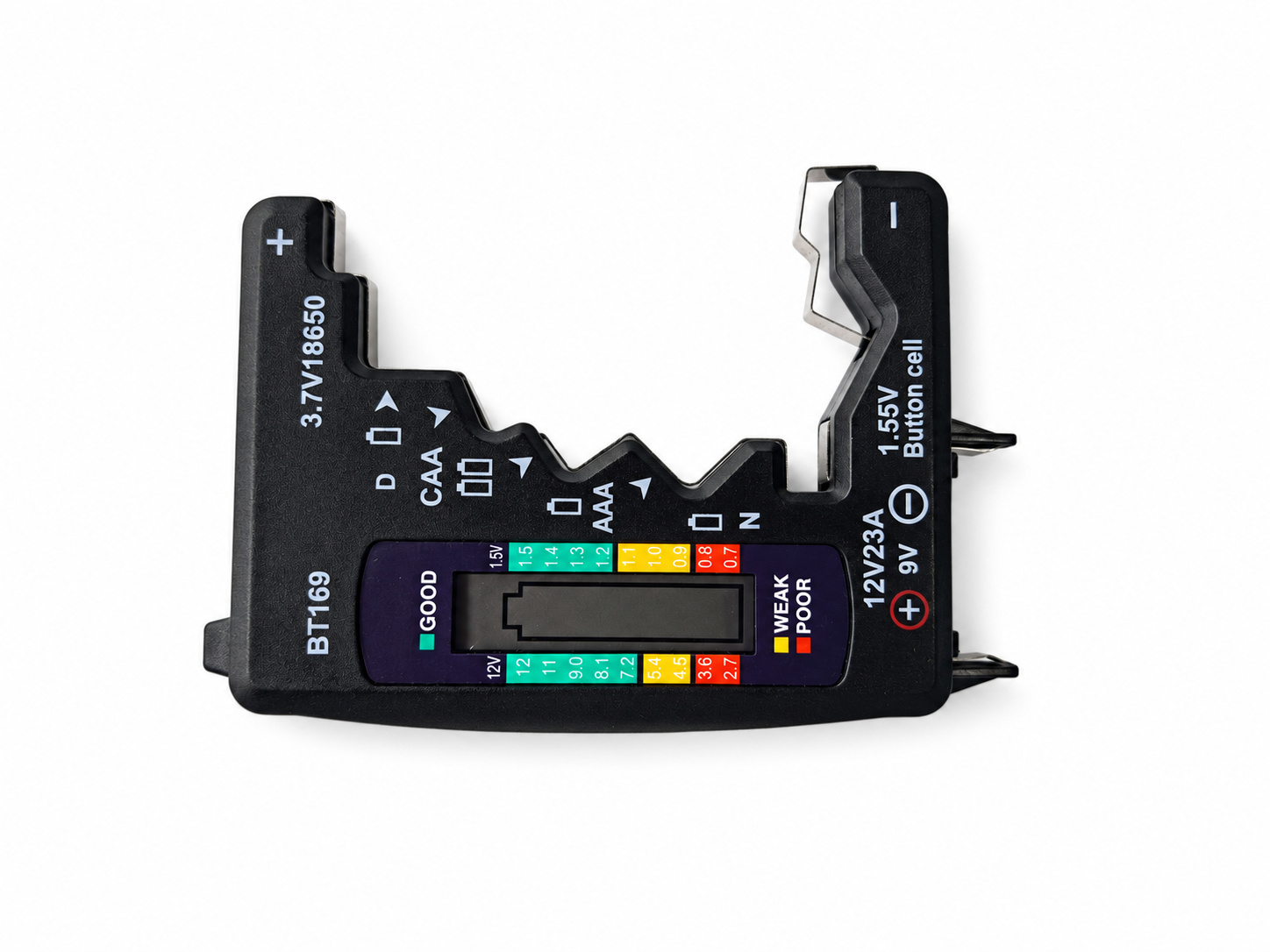
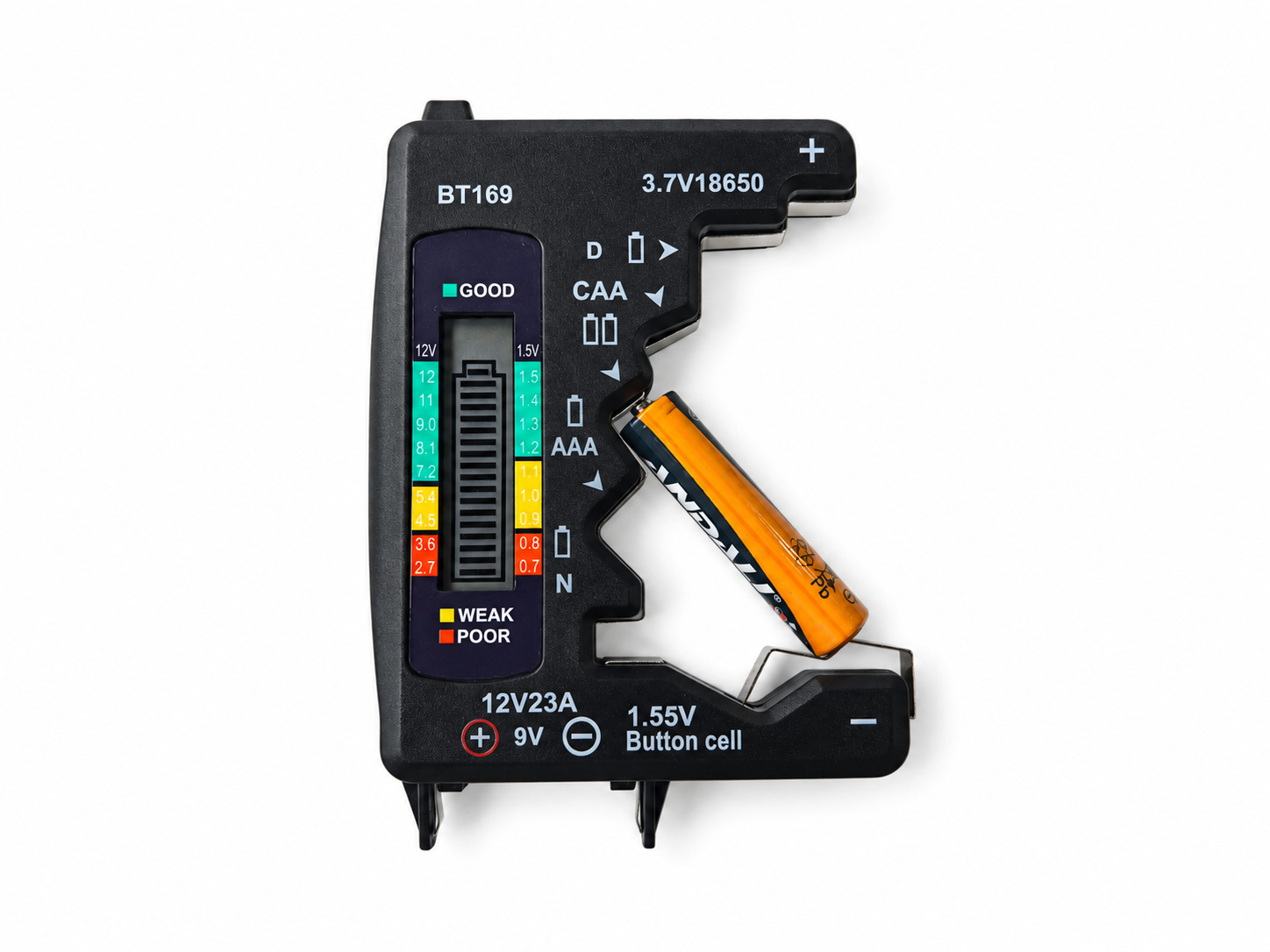
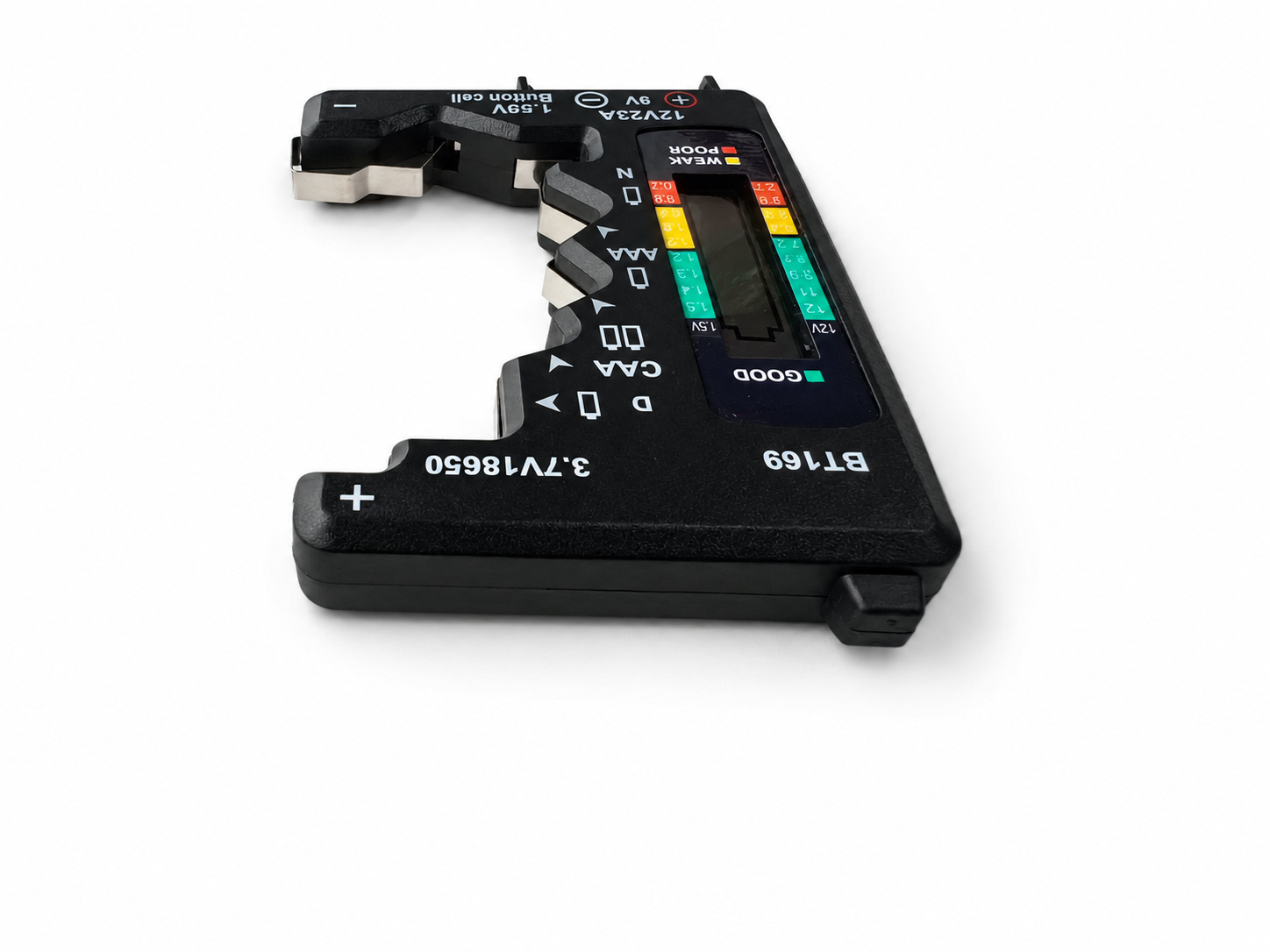
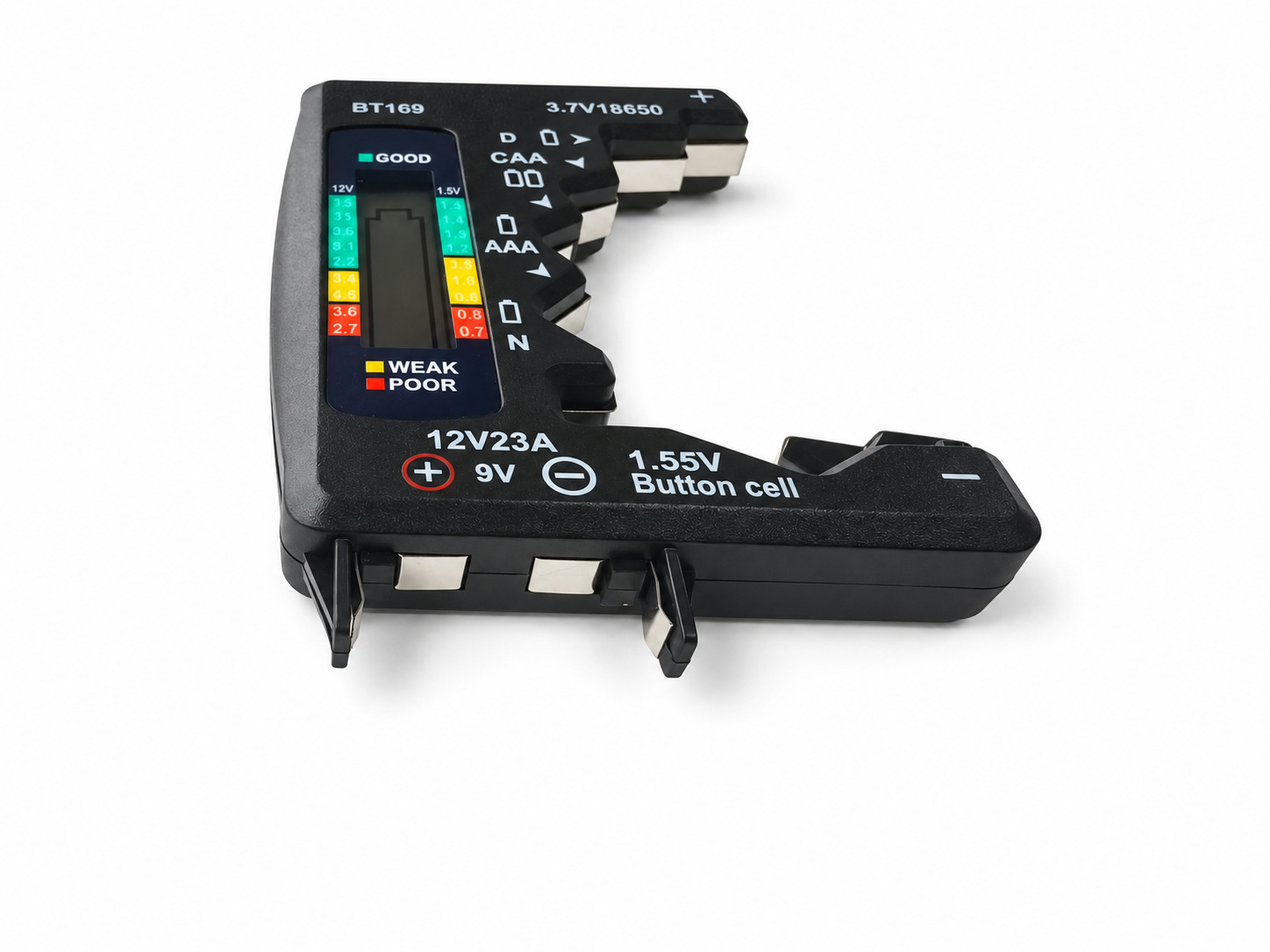
BT169
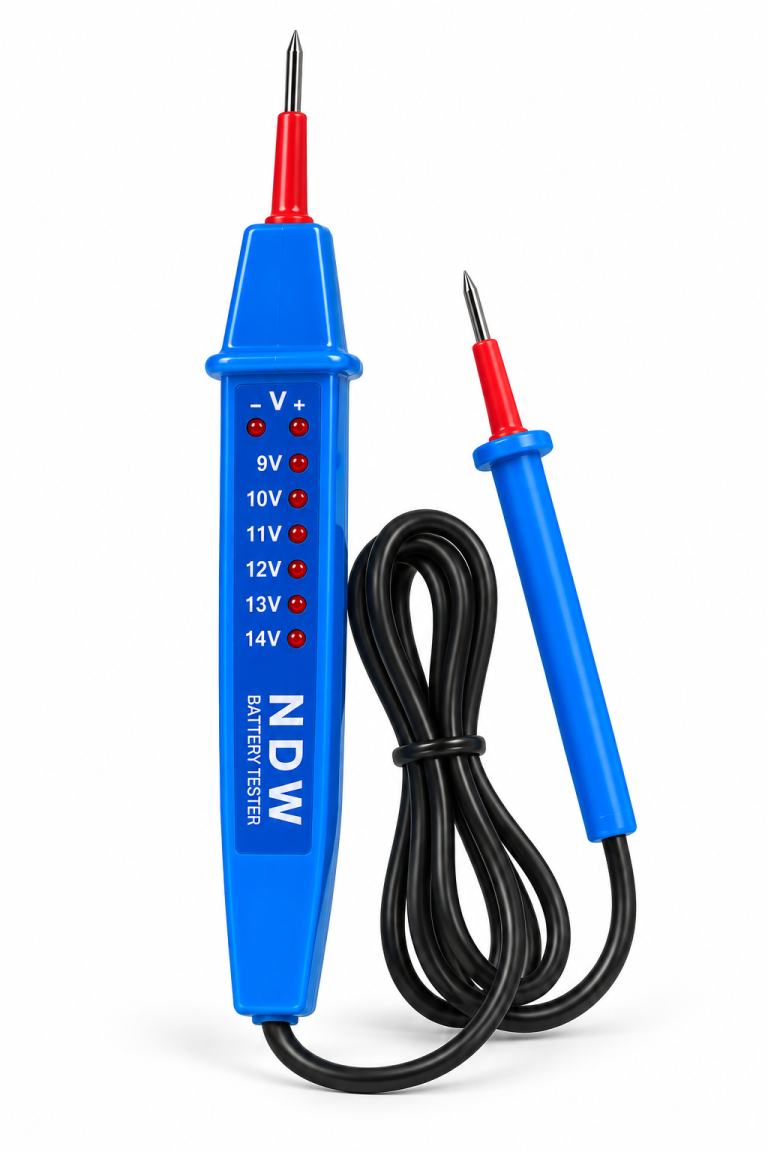
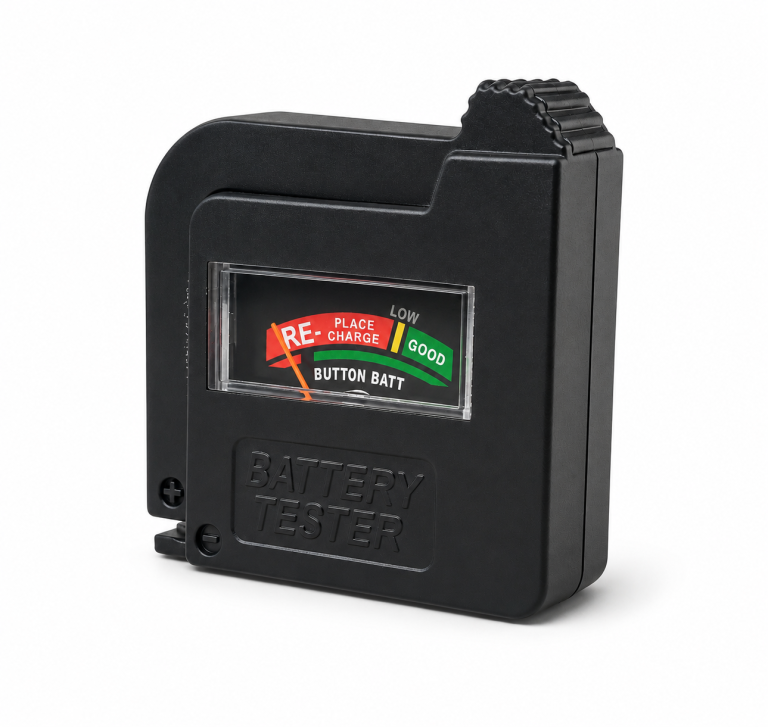
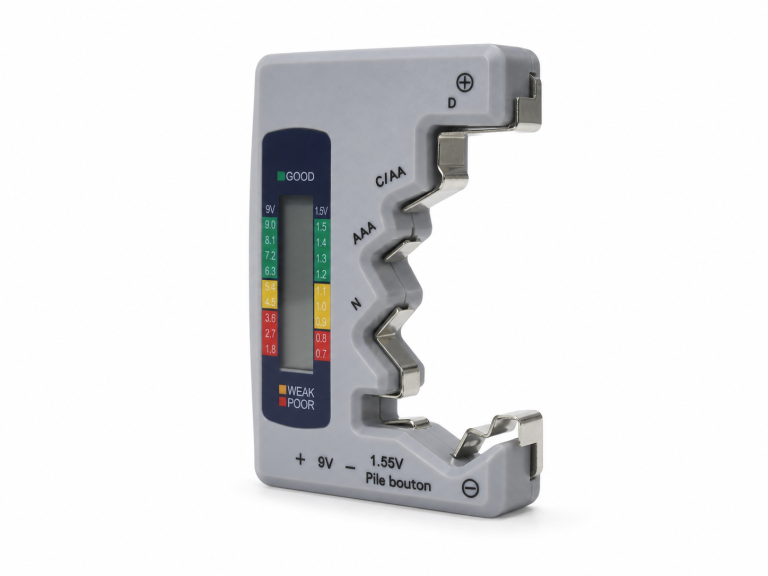
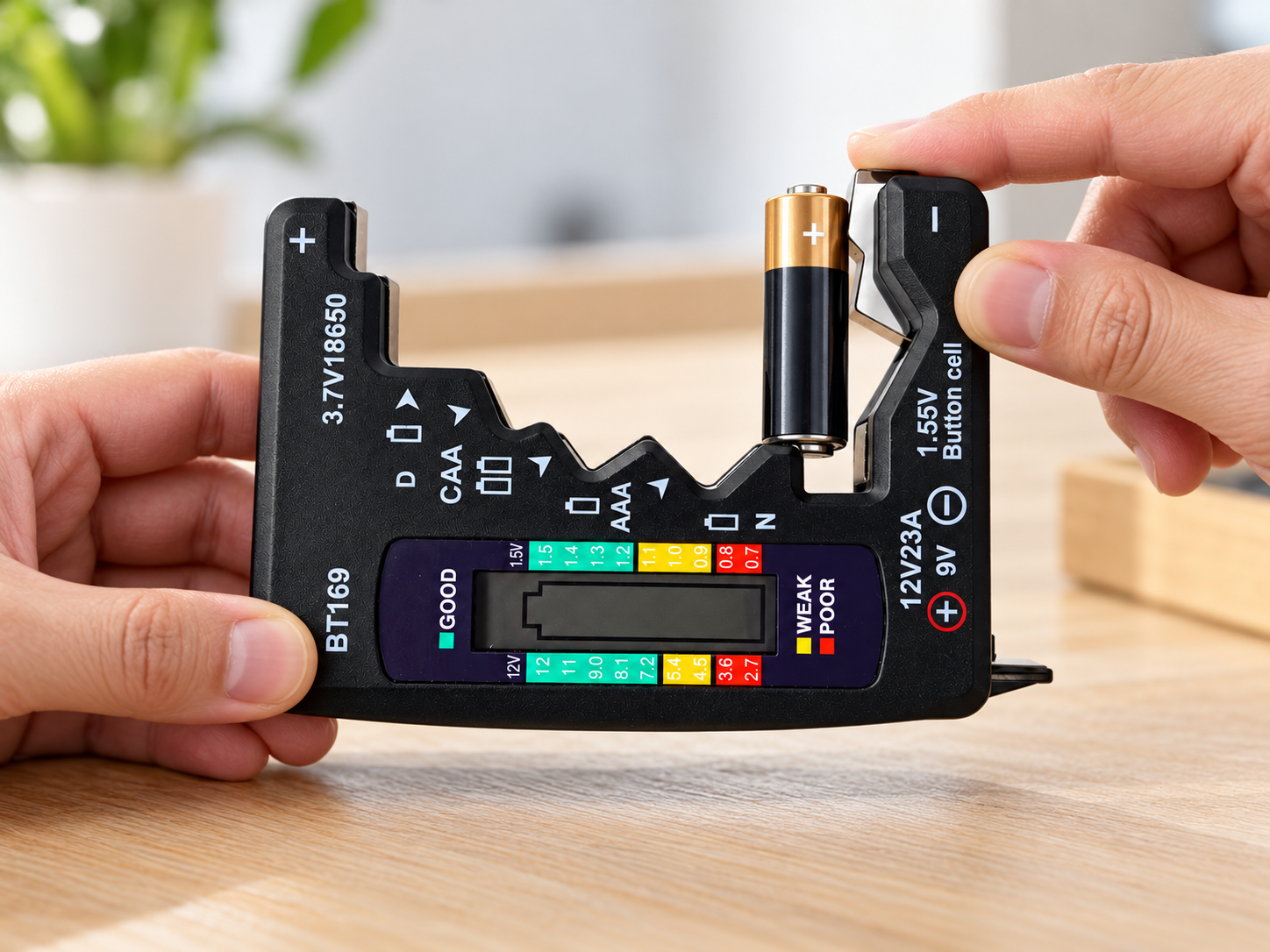
- Description: Testeur de piles avec indication GOOD/WEAK/POOR ; teste les piles 1,55V, 9V, 12V 23A et les piles boutons.
- Alimentation: 3,7V 18650 (selon panneau).
- Remarque: spécification complète non communiquée dans les sources de données ; paramètres à confirmer.
Key Features
- Description: Testeur de piles avec indication GOOD/WEAK/POOR ; teste les piles 1,55V, 9V, 12V 23A et les piles boutons.
- Alimentation: 3,7V 18650 (selon panneau).
- Remarque: spécification complète non communiquée dans les sources de données ; paramètres à confirmer.
Product Information
- Series
- Testeurs de piles
- Model
- BT169
- SKU
- BT169
- Description
- Testeur de piles avec indication GOOD/WEAK/POOR ; teste les piles 1,55V, 9V, 12V 23A et les piles boutons.
- Alimentation
- 3,7V 18650 (selon panneau).
- Remarque
- spécification complète non communiquée dans les sources de données ; paramètres à confirmer.
Specifications
| Function | BT169 |
|---|---|
| Description | Testeur de piles avec indication GOOD/WEAK/POOR ; teste les piles 1,55V, 9V, 12V 23A et les piles boutons. |
| Alimentation | 3,7V 18650 (selon panneau). |
| Remarque | spécification complète non communiquée dans les sources de données ; paramètres à confirmer. |
Application
This instrument is designed for electrical testing, installation and diagnostics across residential, commercial and industrial settings. Contact our team to discuss your specific application.
General Information
Packaging
Conditionnement: non communiqué Quantité par carton: non communiqué Dimensions du carton: non communiqué Poids brut/net: non communiqué
Product Details
FAQ
What does a battery meter do?
A battery tester measures battery voltage and state of charge, so you can quickly tell whether a battery needs recharging or replacing.
Which batteries can it test?
Our battery meters cover common household and automotive batteries, including 1.5V, 9V and 12V types. Check the specifications for the supported range.
Can it test car batteries?
Yes, the 12V models are designed for car and motorcycle battery checks. They show the voltage and give a clear good, fair or recharge indication.
Is a battery meter easy to use?
Very — you connect the test leads or place the battery in the slot, and the display shows the result immediately.
We are deciding between the BT-168 and BT-168D for our first order. What is the difference, and when should we stock each?
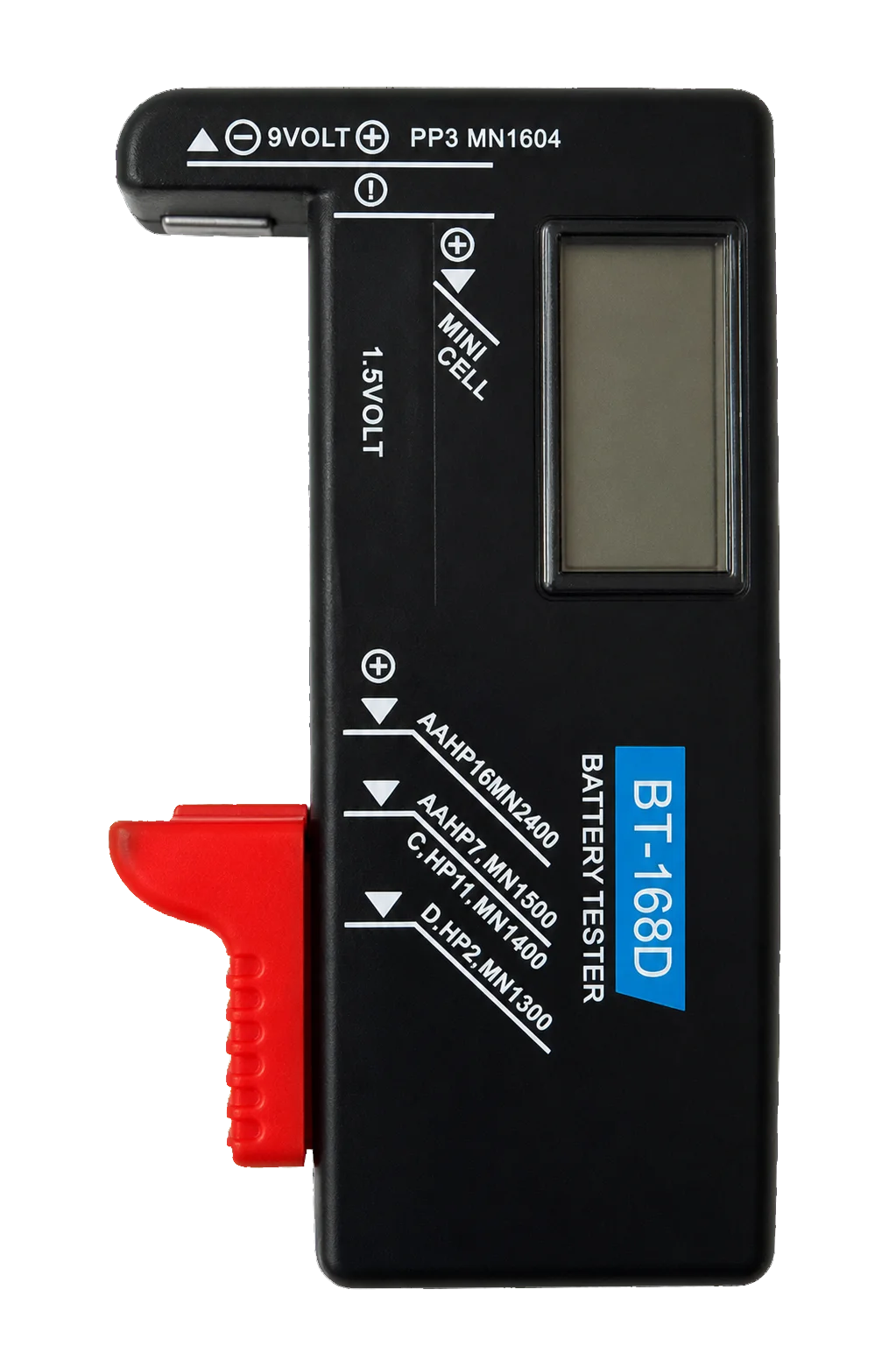
The BT-168 is our classic analog needle battery tester, while the BT-168D gives a digital readout for a clearer numeric result. Stock the BT-168 as the low-cost SKU for a budget retail line, and the BT-168D for customers who want to read the value directly. The HW171 and HW172 sit above both in the line if you need wider coverage, and the exact test ranges are on each product page.
We supply hardware and home-improvement stores. Which battery meter should we stock for that channel?
For a hardware and home retail channel, the BT-168D is the model most buyers order, because the digital display is easy for end consumers to read. The BT-168 works well as a low-cost entry SKU alongside it. If you also supply electronics or tool shops, add the HW171 and HW172 so you can cover customers who need a wider test range.
Can you print our brand on the battery meter and ship it in bulk cartons instead of retail blisters?
Yes. As the CHINYOO factory in Wenzhou, we print your brand on the meter faceplate and the box for the BT-168, BT-168D, HW171 and HW172 under our OEM program. We can ship this line either in retail blister packs or in bulk cartons, so tell us your channel and we will confirm the packing spec. Send your artwork and we will verify the print area before you place the order.
Do the BT-168, BT-168D, HW171 and HW172 carry CE and RoHS, and can you provide the test reports?
Yes, all four models in our battery meter line comply with CE and RoHS, and the CHINYOO factory holds ISO certification. We can provide the test reports for the BT-168, BT-168D, HW171 and HW172 before you order. Ask your sales contact for the current reports.
What should a healthy 12 V car battery read with the engine off?
A fully charged 12 V battery reads 12.65 V or above at rest. Below that, 12.45 V is roughly 75% charged, 12.24 V about 50%, 12.06 V about 25%, and 11.89 V or below is effectively flat. Measure across the battery terminals with the engine and all loads off, and let the battery stand before taking the reading.
How do I check a car battery with a multimeter instead of a battery tester?
Set the meter to DC volts on the 20 V range, put the red probe on the positive terminal and the black probe on the negative, and read the open-circuit voltage. That figure tells you the state of charge, not the capacity — a battery can show 12.6 V and still fail. Take the cranking reading as well, with the engine turning over.
Why does my battery read 12.6 V but the car will not start?
A good resting voltage only proves the battery is charged, not that it can deliver cranking current. A battery with a broken internal connection or heavily sulphated plates can hold a surface charge and still collapse the moment the starter draws current. Watch the voltage during cranking: if it falls below about 9.6 V the battery is the problem, and if it holds, look at the starter circuit and the connections.
Do I need a load tester, or is a voltage reading enough?
A voltage reading is enough to judge state of charge and it is the fastest check available. It cannot measure remaining capacity, so for a battery you suspect is failing under load you need either a load tester or the cranking-voltage test. Run both when a vehicle comes in with a no-start complaint and the resting voltage looks healthy.
Quelle est la quantité minimale pour une commande en gros ?
Nous acceptons aussi bien les petites commandes d’essai que les commandes par conteneur. Indiquez les modèles et les quantités souhaités. Notre équipe vous communiquera les prix et délais sous 24 heures.
Proposez-vous une fabrication OEM/ODM sous notre marque ?
Oui. Notre usine, fondée en 2008, propose des étiquettes et des emballages personnalisés ainsi que des plages de mesure adaptables. Envoyez-nous votre cahier des charges.
Peut-on évaluer un échantillon avant une commande en gros ?
Oui. Un échantillon vous permet de vérifier la fabrication et l’étalonnage. La livraison express prend généralement 3 à 7 jours ouvrés. Le coût de l’échantillon est déduit de votre première commande en gros du même modèle. Indiquez les modèles par formulaire ou courriel. Nous établirons un devis et expédierons après paiement.
Related Products