
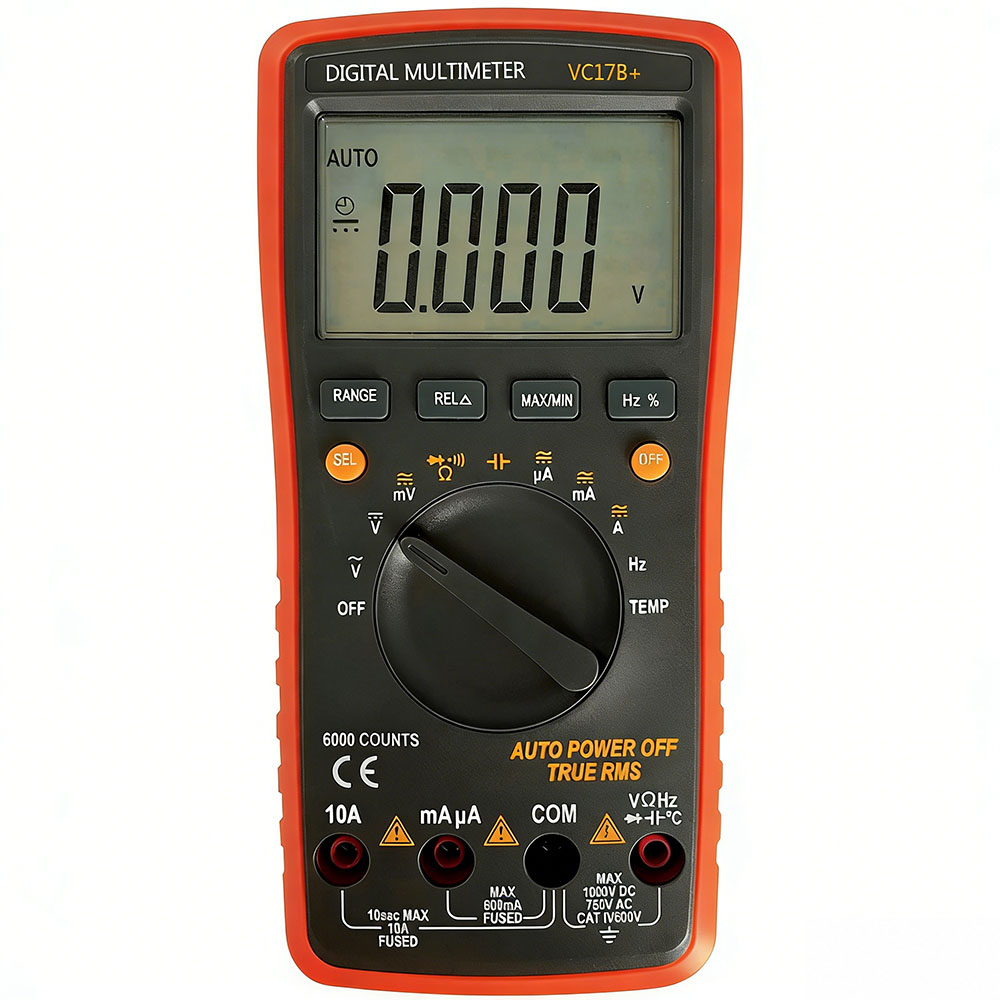
Pentru o tensiune sinusoidală curată, cele două aparate indică de obicei valori apropiate. Pentru curentul pulsatoriu de la intrarea unui driver LED, alege un domeniu de curent alternativ cu True RMS și verifică lățimea de bandă.
Cum influențează forma de undă indicația?
| Forma de undă | Aparat cu răspuns la valoarea medie | Ce trebuie verificat |
|---|---|---|
| Sinusoidă curată | Indicație apropiată de True RMS | Compară precizia pe domeniul ales. |
| Undă dreptunghiulară simetrică | Indică aproximativ cu 11% mai mult | Și aparatul True RMS are nevoie de o bandă suficientă. |
| Sinusoidă redresată monoalternanță | Aproximativ cu 29% sub valoarea eficace totală | Pentru a include componenta continuă, folosește modul AC+DC RMS. |
| PWM sau ieșire de convertizor de frecvență | Eroarea depinde de factorul de umplere | Pentru tensiunea fundamentalei, verifică dacă există un filtru adecvat. |
De unde vine factorul 1,11?
Aparatul înmulțește media semnalului redresat cu 1,11. Pentru o sinusoidă, rezultatul este valoarea eficace. Un aparat True RMS calculează rădăcina pătrată din media pătratelor valorilor instantanee. La un semnal distorsionat, chiar și o indicație stabilă poate fi eronată.
La ce sarcini se vede diferența?
Un element de încălzire rezistiv alimentat direct cu tensiune sinusoidală absoarbe un curent aproape sinusoidal. Un variator de lumină taie o parte din undă. O sursă în comutație poate absorbi impulsuri scurte de curent chiar dacă tensiunea rețelei este aproape sinusoidală.
Ce urmărești în fișa tehnică?
Verifică separat tensiunea și curentul alternativ. Factorul de creastă este raportul dintre valoarea de vârf și valoarea eficace. Vârfurile pot satura intrarea chiar dacă indicația se află în domeniu. Verifică factorul admis la valoarea estimată și banda la frecvența de lucru.
Ce treci în specificația de achiziție?
La 50 V eficace și un factor de creastă de 4, vârful atinge 200 V. Compară-l cu limita de vârf pentru domeniul ales. Precizează dacă ai nevoie de True RMS pentru tensiune, curent sau ambele și verifică un exemplar pe o sarcină reprezentativă.