
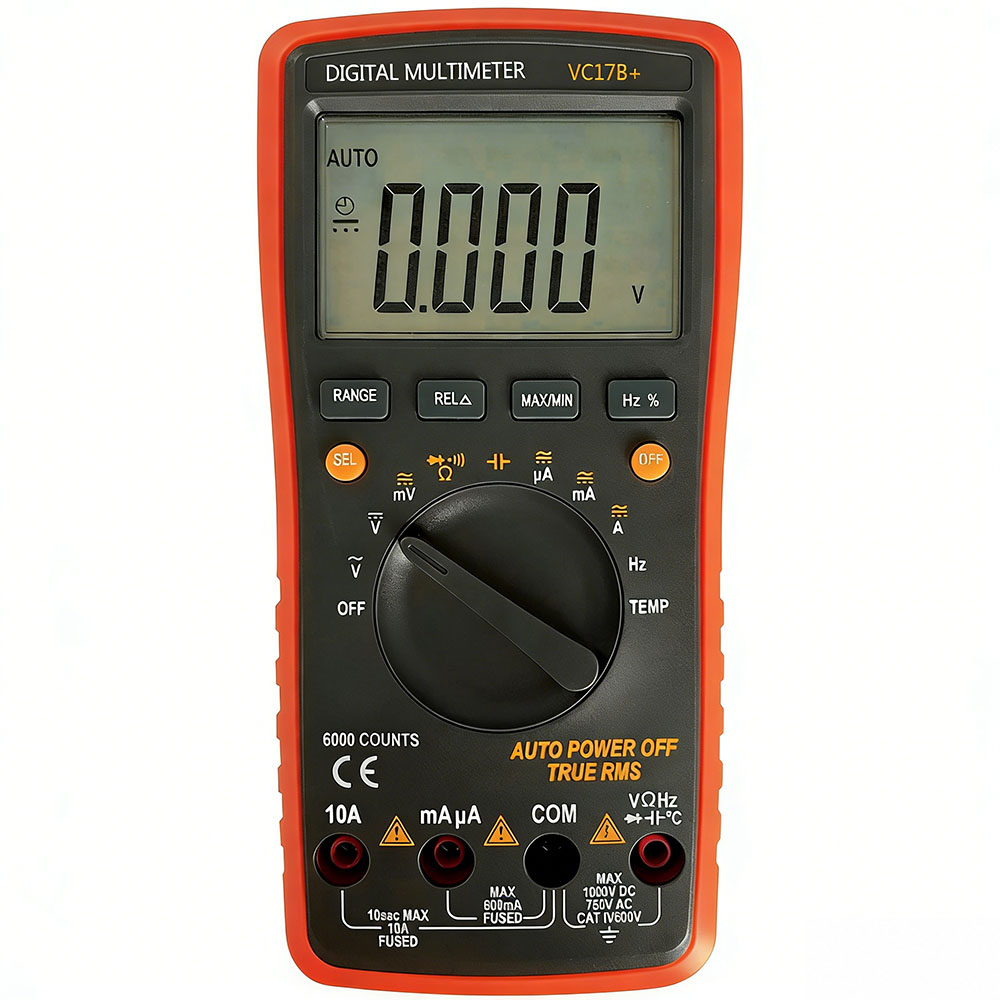
Con una tensione sinusoidale pulita i due strumenti forniscono letture simili. Per la corrente impulsiva in ingresso a un driver LED, verificate che la portata di corrente alternata supporti il True RMS e abbia banda sufficiente.
Come cambia la lettura con la forma d’onda
| Forma d’onda | Multimetro a valore medio | Che cosa verificare |
|---|---|---|
| Sinusoide pura | Lettura vicina al True RMS | Confrontate la precisione sulla portata scelta. |
| Onda quadra simmetrica | Circa l’11% in più | Anche il True RMS richiede una banda adeguata. |
| Sinusoide raddrizzata a semionda | Circa il 29% in meno rispetto al valore efficace totale | Per includere la componente continua serve la misura RMS AC+DC. |
| Uscita PWM o di un inverter | L’errore varia con il ciclo di lavoro | Per la tensione della fondamentale verificate la disponibilità di un filtro adatto. |
Perché si usa il fattore 1,11?
Lo strumento a valore medio moltiplica per 1,11 la media del segnale raddrizzato. Per una sinusoide si ottiene così il valore efficace. Il True RMS calcola invece la radice della media dei quadrati dei valori istantanei. Su un segnale distorto anche una lettura stabile può essere imprecisa.
Con quali carichi si nota la differenza?
Una resistenza riscaldante collegata direttamente a una tensione sinusoidale assorbe una corrente quasi sinusoidale. Un dimmer taglia parte dell’onda. Un alimentatore switching può assorbire brevi picchi di corrente anche con una tensione di rete poco distorta.
Come leggere la scheda tecnica
Controllate separatamente tensione e corrente alternate. Il fattore di cresta è il rapporto tra valore di picco e valore efficace. Un picco elevato può saturare l’ingresso anche quando il valore visualizzato rientra nella portata. Verificate il fattore ammesso al livello previsto e la banda alla frequenza di lavoro.
Come definire le specifiche per un ordine?
Con 50 V efficaci e un fattore di cresta pari a 4, il picco raggiunge 200 V. Confrontatelo con il limite di picco ammesso sulla portata. Precisate se il True RMS serve per tensione, corrente o entrambe e provate un campione su un carico rappresentativo.