

How to Test a Fuse and a Circuit Breaker with a Multimeter
A blown fuse and a tripped breaker are the two faults an electrician meets most often, and they are not diagnosed the same way. A fuse is a one-shot device that either has continuity or does not, so it can be tested with the power off. A breaker is a resettable device that trips for two completely different reasons — a short downstream of it or a genuine overload — and telling those apart is what decides whether you reset it or start looking for a fault. The meter does both jobs, and the DT33 series covers the continuity, resistance and voltage ranges the procedures below require.
Every method here comes from standard electrical practice, and the meters named are built by Wenzhou Zhengyuan Electronic Co., Ltd. in its Wenzhou factory.
Continuity, Resistance and Voltage: Three Ways to Test a Fuse
There are three methods and they are not interchangeable. The continuity method uses the meter’s buzzer to tell you whether current can pass at all, and it is fast but coarse. The resistance method measures how much resistance the element actually has, which catches the fuse that has not blown but has gone high-resistance. The voltage method measures the potential difference across a fuse while it is still in a live circuit, and it is the only one of the three that works without removing the fuse or isolating the supply.
The choice between them is decided by whether you can isolate the circuit. If you can, resistance is the better measurement; if you cannot, voltage is the only safe one. What the basic multimeter procedure calls the resistance range is the same range used here, so the technique carries over directly.
Testing a Fuse Out of Its Holder
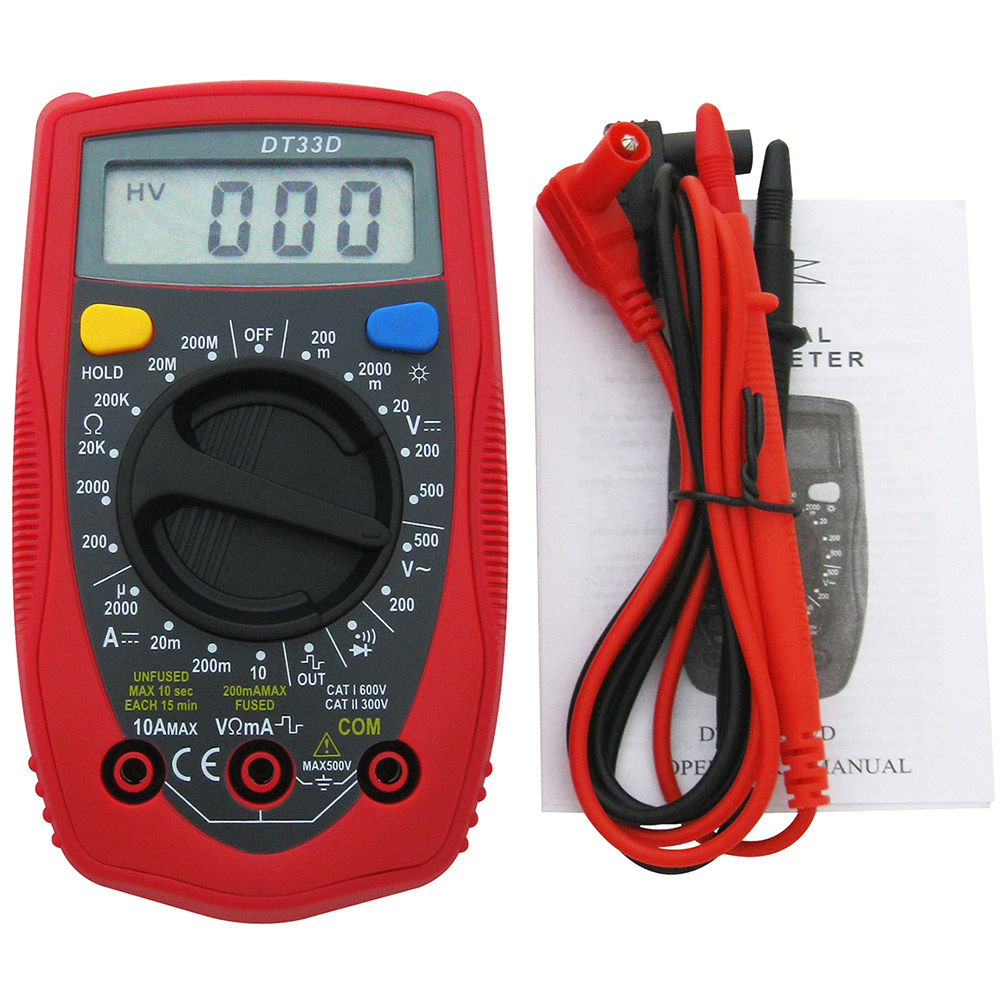
Isolate the circuit, remove the fuse, and set the meter to its lowest resistance range. A sound fuse reads at or near zero — a few tenths of an ohm on the leads themselves is normal and worth subtracting by touching the probes together first to see what the leads contribute. A blown fuse reads open, which on an auto-ranging meter shows as OL. Between those two extremes sits the failure that continuity alone misses: a fuse reading a fraction of an ohm to a few ohms has not blown, but its element has been damaged and it will drop voltage and run hot under load. On a low-current fuse, anything meaningfully above the lead resistance is a reason to replace it rather than refit it.
Testing a fuse while it is still in the holder is where most false results come from. In a live circuit the fuse sits in parallel with whatever is downstream of it, so an ohmmeter will find a path through the load and report continuity on a fuse that is completely open. That is not a subtle error; it is the single most common way a blown fuse gets declared good. If the fuse cannot be removed, use the voltage method instead.
Cartridge, Blade and Glass Fuses
The three common physical types behave the same electrically and differ only in how you get contact with them. Cartridge and glass fuses have end caps, so the probes go on the caps with the fuse out of its holder. Blade fuses in vehicle and low-voltage panel work have two exposed tabs, and these are best tested in the socket with the circuit isolated by pulling the fuse — probing the small test points on top of a blade fuse is possible, but the contact is unreliable enough that it produces false readings more often than it saves time.
One type deserves a separate note. A resettable or self-resetting fuse — the polyfuse in a control circuit — is not a one-shot device and will read open while it is hot and conducting again once it cools. Testing one while it is still warm is meaningless. Let it reach ambient temperature before you judge it, or you will replace a component that was working correctly.
Voltage Testing a Fuse That Cannot Be Isolated
With the circuit energised and the load switched on so current is actually flowing, measure the voltage across the fuse rather than to earth. A sound fuse has almost no voltage across it — ideally a few millivolts, and certainly under 0.1 V on a power circuit. A blown fuse carries the full supply voltage across it, because there is no current path through it, and the meter reads line voltage from one end to the other. This method also catches the high-resistance fuse that continuity would pass, since a damaged element that is dropping significant voltage under load shows up as a reading where there should be none.
The measurement is taken at line potential, so the meter and its leads have to be rated for the location. At a distribution board that means a CAT III rating at the working voltage, which the CAT ratings explained article covers in detail — this is exactly the situation the category exists for, and a meter rated only CAT II has no business being used for it.
Testing a Circuit Breaker
A breaker that has tripped is tested in two states. With the breaker switched off and the circuit isolated, measure resistance across its terminals: a serviceable breaker in the on position reads near zero, and one that reads open in the on position has a failed internal mechanism and is replaced, not reset. Then, with the supply restored and the breaker on, measure voltage at the outgoing terminal. Voltage present at the incoming terminal and absent at the outgoing one confirms the breaker is not passing supply, which is the definitive test and the one that does not depend on the meter reading a small resistance accurately.
The measurement most people skip is the current. A clamp meter around the outgoing conductor while the circuit runs under load tells you whether the breaker is tripping because it should be — because the circuit is genuinely drawing more than its rating — or because it has become oversensitive. The clamp meter procedure covers taking that reading without breaking the circuit, which is the whole reason the clamp exists.
Why a Breaker Trips Again After You Reset It
How fast it trips is the diagnostic. A modern breaker is both thermal and magnetic: the magnetic element responds to a large current — a short circuit — and trips in milliseconds, while the thermal element responds to a moderate overload and trips after seconds or minutes, the delay being deliberate so that a motor’s brief inrush current does not trip the circuit. A breaker that trips the instant it is reset is seeing a short circuit downstream and the fault must be found before it is reset again. A breaker that holds for a while and then trips is seeing a sustained overload, and the question becomes whether the load has genuinely grown past the breaker’s rating or whether the breaker itself has drifted.
Two other devices produce the same symptom and are not breakers. An RCD or RCBO trips on earth leakage rather than overcurrent, and one that trips with no load connected is responding to an insulation fault or to moisture in the installation rather than to anything the breaker would see. An arc-fault device trips on the signature of a series or parallel arc, and a loose terminal screw is a common cause. Resetting any of the three without establishing which one tripped, and why, is how a fault gets buried instead of fixed.
Send Us the Fuse Types You Handle
Which meter fits your work depends on where the testing happens. Bench and appliance work needs continuity, resistance and a diode test and very little else; distribution-board work needs a CAT III voltage range and a meter you can trust at line potential; vehicle work needs a low resistance range that resolves tenths of an ohm, because blade fuse elements and earth straps are where the interesting readings live. Order a sample, run the procedures above on a fuse you know is blown and one you know is sound, and check the resistance range resolves finely enough to see the difference. Then send us what you measured, the fuse and breaker types your customers actually handle and the quantity you are planning. Our Wenzhou engineers reply within 24 hours and quote per-unit pricing once we have your numbers.