

Multimeter Price: What the Number Actually Pays For
Two multimeters that look identical on a shelf can differ in price by a factor of ten, and the difference is almost never in the part you can see. It is in the input fuse, the protection network behind the jacks, the age of the calibration certificate, and how many units were ordered at once. A meter’s price is the sum of those decisions plus the channel it travelled through. Everything below describes how that sum is built, because a buyer who understands the line items can tell which of two quotes is cheap and which is merely inexpensive.
Wenzhou Zhengyuan Electronic Co., Ltd. has been building test instruments in Wenzhou since 2008, across 127 models and more than forty export markets. What follows comes from our own bill-of-materials decisions and from the certification work behind every model we ship.
The Gap Between Factory Gate and Retail Shelf Is a Multiple, Not a Percentage
A meter leaves the factory as one line in an order of thousands and reaches a customer as one item on a shelf. Between those two points sit export freight, import duty, a distributor’s margin, a retailer’s margin, and the cost of holding stock that may sit for a year before it sells. Each of those steps is priced against the factory cost, not added as a flat fee, which is why the retail price of a small instrument is routinely a multiple of the price at the factory gate rather than the same number plus a markup.
This matters when comparing quotes. A buyer who compares two factory quotes is comparing like with like. A buyer who compares a factory quote against a shelf price is comparing two different businesses, and the difference they are looking at has very little to do with the instrument.
The Five Line Items That Decide What a Meter Costs
Inside the enclosure, cost concentrates in a small number of places. The table below lists them in the order a purchasing decision usually reaches them.
| Line item | What a low-cost build does | What a durable build does | What the difference shows up as |
|---|---|---|---|
| Input fuse | Glass fuse, or a single fuse on one jack only | High-breaking-capacity ceramic fuse on the current jack, rated for the full range | A meter that survives one wrong range selection instead of being written off |
| Input protection network | Fixed resistor and a single clamp element | Positive-temperature-coefficient resistor, metal-oxide varistor and a clamp transistor | Accuracy that holds after an overload, rather than drifting quietly |
| Measurement chip | General-purpose converter with firmware correction | Dedicated metering front end with a trimmed reference | Stable last digits, and a calibration that stays inside tolerance |
| Reference resistors | Standard tolerance parts sorted at test | Low-drift parts selected before assembly | Readings that agree with a second meter months later |
| Calibration and paperwork | Factory check, no retained record | Per-unit record with the standards used and the date | A certificate a customer’s auditor will accept |
None of these five items is visible from outside the case, and four of them cannot be inspected without opening the instrument. That is exactly why price is a poor proxy for build quality and why the specification sheet is the only place the difference can be documented.
The Fuse Is the Cheapest Place to Cut and the Most Expensive Place to Save
The current input is the one place on a multimeter where a user error becomes a safety event. A high-breaking-capacity ceramic fuse is a genuine cost item, and replacing it with a glass fuse, or omitting it from one of the jacks, is the single easiest way to move a bill of materials down. The saving is small per unit. The consequence is that a mis-set range on a live circuit turns a measurement into an arc inside the case.
When a quote for two apparently similar meters differs by a margin that the specification does not explain, the current jack is the first place to ask about. The procedure for checking what a fuse actually protects is covered in the fuse and breaker test guide, and the same reasoning applies to the fuse inside the meter itself.
What Certification Adds to Every Model
Compliance is priced per model, not per order. A model that carries CE marking under the Low Voltage and Electromagnetic Compatibility directives and meets RoHS has been through testing, documentation, and a technical file that has to exist before the first unit ships and stay current afterwards. Every variant that changes the enclosure, the power supply or the measurement front end needs its own work. A supplier with a hundred and twenty-seven models has paid for that hundred and twenty-seven times.
This is the line item most often missing from a comparison between a branded instrument and an unbranded one at half the price. The unbranded unit may be perfectly good; what it usually lacks is the file that lets a distributor sell it into a market with an enforcement regime.
Why the Board Inside Is Often the Same Board
Multimeter design has consolidated. A small number of metering front ends serve a very large share of the world’s instruments, and two meters at very different prices can genuinely contain the same converter. The difference is then entirely in what surrounds it: the protection network, the reference parts, the enclosure, the display, and the calibration regime. This is why comparing chips is not a useful way to compare meters, and why two products built around the same silicon can behave very differently after a year of site work.
It also explains a pattern buyers notice: cheap meters often read accurately when new and drift once they have been dropped, overheated or overloaded. The converter did not change. The parts protecting it did.
What Order Quantity Actually Changes
Unit price falls with quantity for two different reasons, and only one of them is a discount. The first is straightforward purchasing leverage on components. The second is tooling: an enclosure, a silk screen, a colour match or a custom label carries a one-time cost that has to be spread across the order. At low volume that one-time cost dominates the unit price; at high volume it disappears into the components.
This is why a factory cannot always answer “what does this cost” without asking how many. A quote for a hundred units and a quote for ten thousand units for the same instrument are not the same product decision, and the honest answer for a new programme is usually a range with the volume assumption stated. The guide to choosing a digital multimeter covers how to write a specification that can be quoted at all.
Send Us the Specification You Are Pricing
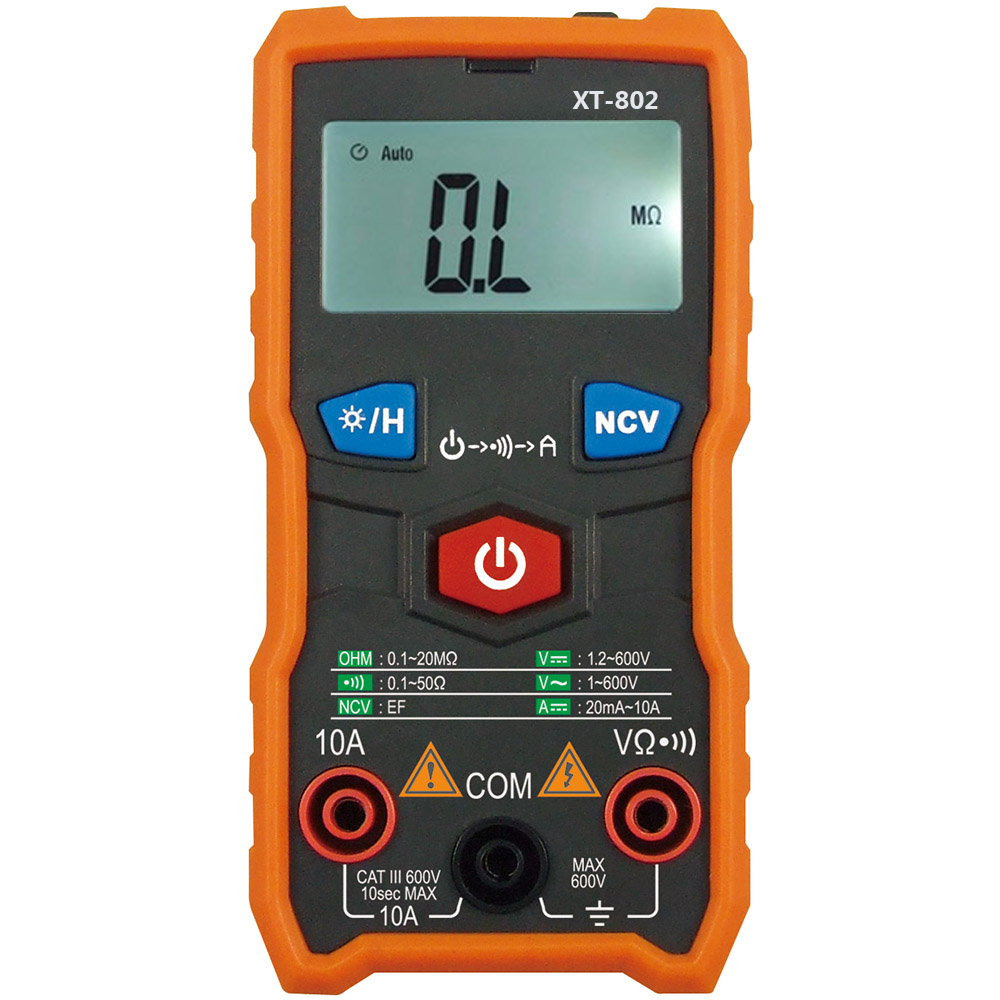
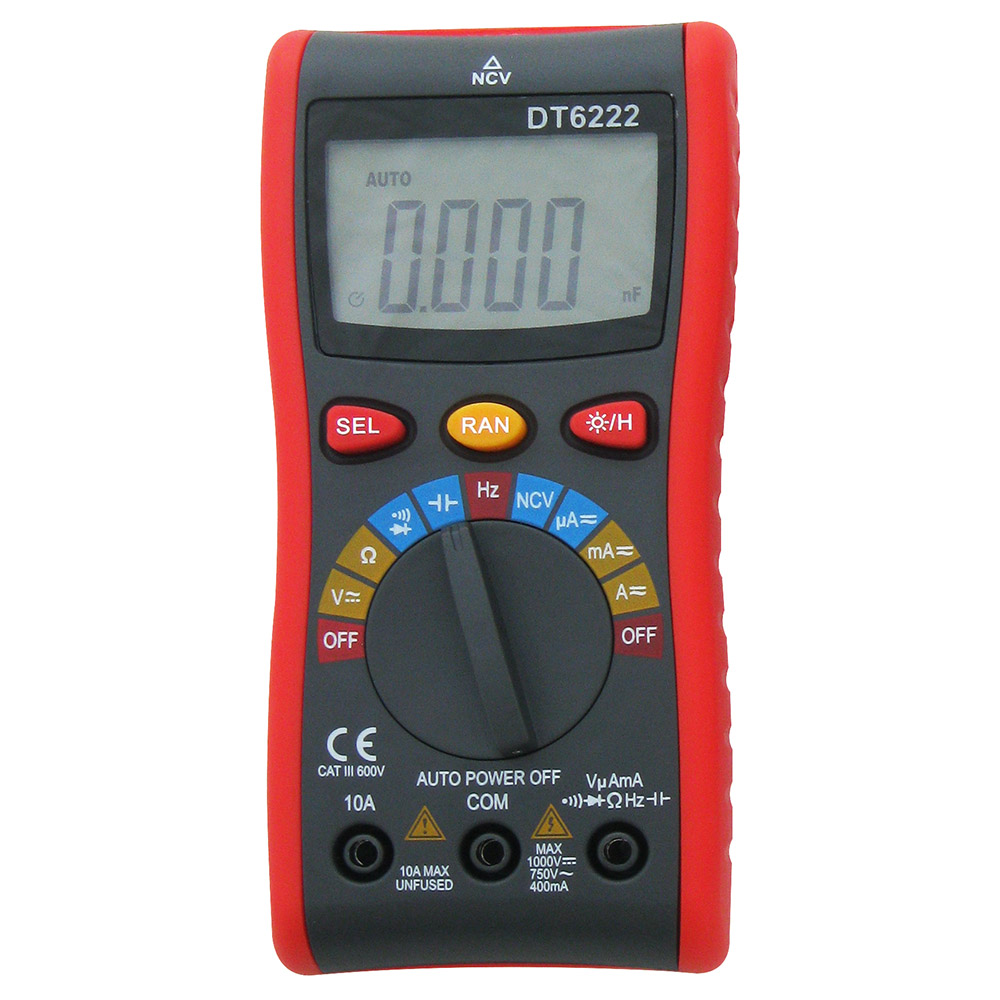
If you are comparing quotes or building a range, send us the specification you are working to: the functions, the ranges, the accuracy you need to claim, the market you intend to sell into, and the quantity for the first order. We will tell you which of the five line items above is driving the number, which of the XT802 or DT6222 platforms is the closer starting point, and what changes at a higher volume. Our Wenzhou engineers reply within 24 hours with per-unit pricing against your actual numbers rather than a catalogue figure.