

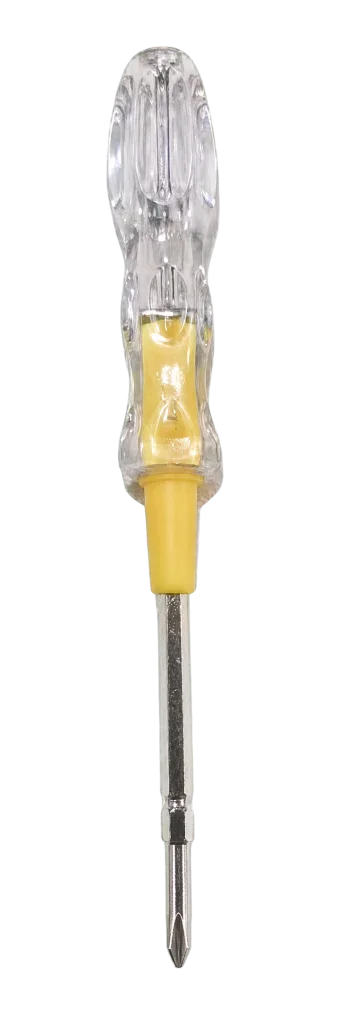
A voltage tester answers one question fast: is this conductor live? It is the simplest instrument on the board, and — because it touches energized systems — the one where safety habits matter most.
The Three Main Types
- Voltage test pens — pocket-sized screwdriver-style testers such as M100 and M200, used for a quick go / no-go check.
- Digital live-wire testers — display an actual voltage reading, like the 130855 and 88-12, or the 1802 / 1803 / 1805A-D family.
- Inductive (non-contact) alarm testers — detect the presence of voltage through insulation, such as the VD10 / VD11 / VD21 / VD123 and 6877-18 / 6877-58.
Non-Contact Detection: Convenient, Never a Substitute
Non-contact voltage testers are a fast way to sweep a panel and find live feeders. They are great for identifying, not for confirming dead — always verify with a tester that gives a visible reading before you touch anything.
Safety Rules That Never Change
- Choose the correct CAT rating for the system you are on
- Test the tester on a known-live source first, then test, then test again
- Keep hands behind the guard and use insulated probes
- Never work alone on live systems above safe limits
For distributors, voltage testers are a high-volume, low-risk entry line — the 1AC-D and AC-1 pocket models sell year-round. OEM buyers can put their own brand on any model, from basic pens to inductive alarm testers.
Explore the voltage tester category or all CHINYOO instruments. For pricing and MOQ, request a quote.
Related reading: CAT Ratings Explained: Choosing the Right Safety Category for Your Multimeter
Related reading: Voltage Tester vs Multimeter: Which One Do You Actually Need?