

Car Battery Voltage Chart: What Each Reading Means
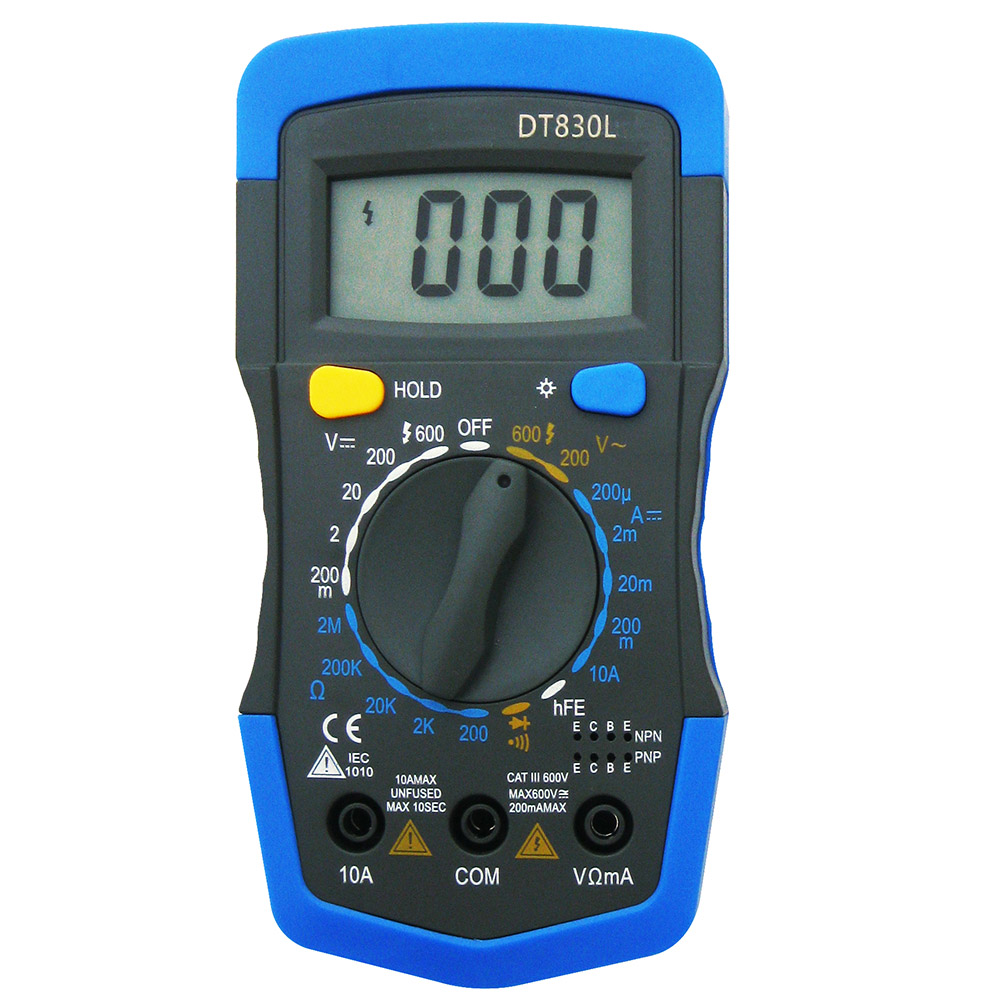
A lead-acid battery at rest holds about 12.6 volts when it is fully charged and about 11.9 volts when it is flat, and almost everything in between is a state of charge rather than a verdict on the battery. The chart below is the reference for turning a number on a multimeter into a decision, and the rest of this page is about taking the reading correctly — because a battery measured straight after a drive will read high, one measured in the cold will read low, and both will send you to the wrong conclusion. Any meter with a DC voltage range will do the job, from the DT830 series upwards.
Every figure below comes from standard lead-acid open-circuit characteristics and from production specification sheets. Wenzhou Zhengyuan Electronic Co., Ltd. builds the meters named here in its Wenzhou factory.
Open-Circuit Voltage Against State of Charge
The table applies to a battery at rest, disconnected from any load, at around 25 °C. Surface charge must be removed first, by letting the battery sit for two hours or by drawing a load from it briefly, or every reading will be high.
| Open-circuit voltage | State of charge | What it means in practice |
|---|---|---|
| 12.65 V or above | 100% | Fully charged. If the vehicle still will not start, the battery is not the fault. |
| 12.45 V | 75% | Serviceable. Accepts charge normally, but should be charged before it is put back into service. |
| 12.24 V | 50% | Half discharged. Starting is still reliable in warm weather and unreliable in the cold. |
| 12.06 V | 25% | Poorly charged. Cranking will be slow and the battery is at risk of sulphating if left here. |
| 11.89 V or below | 0% | Discharged. Needs charging before any load test, and needs a charge current check if it keeps returning here. |
Above roughly 12.9 volts on a resting battery you are almost certainly reading surface charge rather than state of charge, and the battery should be given time to settle before the number is trusted.
How to Take the Reading So the Number Means Something
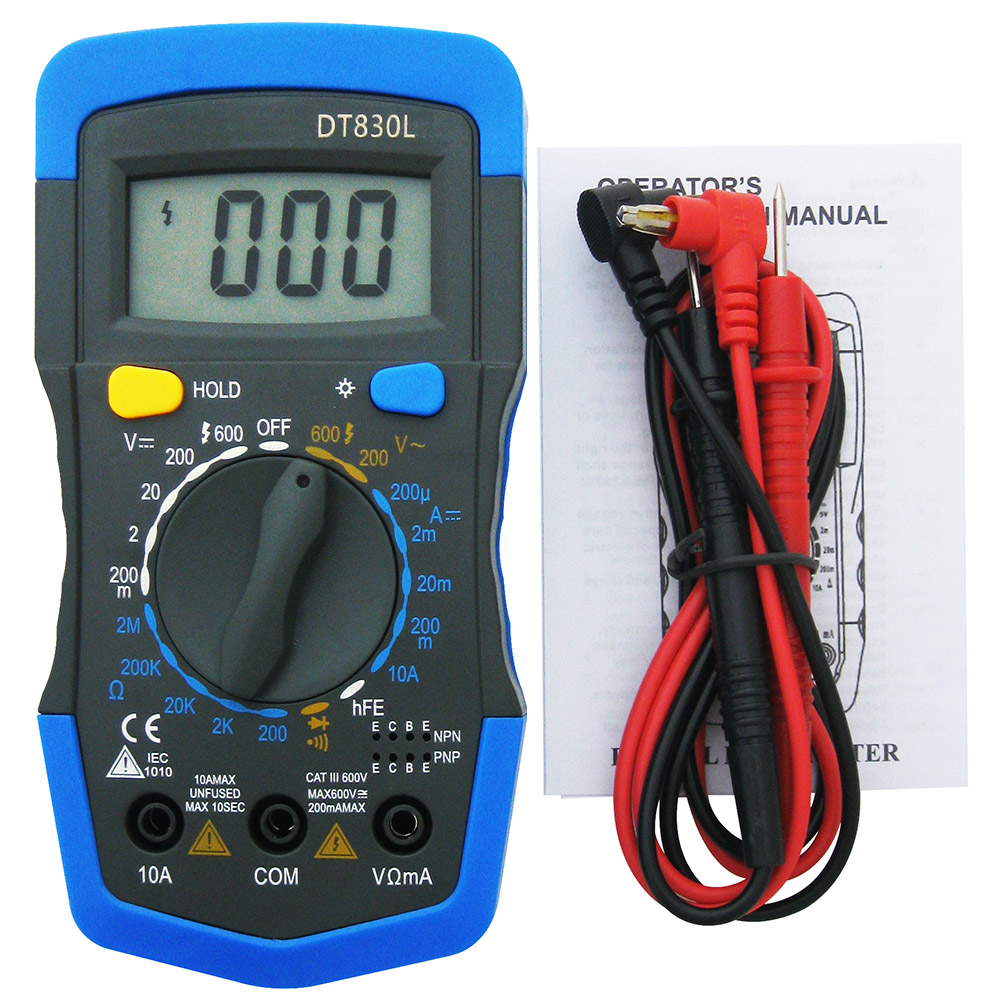
Set the meter to DC volts on a range above 20 V, put the black probe on the negative post and the red on the positive, and read the display. The instrument handling itself is the same as any other measurement and the basic multimeter procedure covers it. What matters for a battery check is the three conditions above: the battery must be at rest rather than just off a charger or a drive, the load must be disconnected so nothing is drawing current, and the temperature should be somewhere near the middle of the range. A battery tested in a cold workshop in winter will read low by a margin that has nothing to do with its condition, which is why a battery that will not crank at −5 °C can test perfectly well at 20 °C.
Probing the posts directly is the right method. Probing the terminals instead of the posts reads the voltage across the clamp joints as well as the battery, and a corroded or loose clamp will produce a low or unstable reading on a battery that is in good condition — a false diagnosis that has cost more batteries than any genuine failure.
12.6 V and Above: Healthy
A resting battery at 12.6 V or above is charged, and if the vehicle will not start the fault is downstream of it: the starter, the solenoid, the earth strap, the ignition switch, or the cables and clamps themselves. The useful next measurement is voltage at the starter terminal while cranking, because a battery that holds 12.6 V at rest and collapses to 8 V under load is a battery at the end of its life, while one that holds 11 V under load and still will not crank is a starting-circuit problem. The automotive multimeter guide covers the measurement set that this kind of fault-finding runs on.
Where the load test happens is also the reason the clamp matters. A battery can be charged, hold its voltage at rest and fail to deliver its rated cold cranking current, and the only way to see that is to watch the voltage while the starter draws. A temperature check at the same time, on the battery case and on the alternator body, adds the information that a voltage reading alone does not carry.
12.2 V to 12.4 V: Half Charged, and Why It Matters
This is the band that does the damage. A battery sitting at 12.24 V is at 50% and will still start a warm engine without complaint, so the owner carries on using the vehicle and the battery carries on sitting in a partially discharged state. A lead-acid battery left below about 12.4 V for weeks at a time sulphates: the lead sulphate that forms on the plates during discharge crystallises into a form that will not convert back during charging, and the capacity it loses this way never comes back. A vehicle that does short journeys, is used infrequently or has a parasitic drain will drift into this band without any symptom at all.
The measurement that identifies it is the resting voltage taken a day after a normal drive rather than immediately after one. A resting voltage that keeps returning to the low 12s after a full charge points at the charging system rather than the battery, and the next section is where that gets tested.
Below 12.0 V: Discharged, Not Necessarily Dead
A battery at 11.89 V is flat, and flat is not the same as failed. A deeply discharged battery will usually accept charge and recover if it is recharged properly and promptly, and the priority is to get charge into it before the sulphation above sets in. The caveats are the ones that matter commercially: a battery that has been left flat for months, a battery that has been frozen while discharged, and a battery that will not come up above the low 12s after a charge are all candidates for replacement rather than resuscitation.
A battery that returns to 11.9 V repeatedly after a full charge is either being drained by something in the vehicle or is being undercharged by the alternator, and a battery swap will not fix either. Finding out which takes two measurements, both of which the automotive electrical testing guide walks through.
Reading the Battery While the Engine Runs
With the engine running, the alternator should hold the battery at a charging voltage between roughly 13.5 V and 14.5 V. Below 13.2 V the battery is not being charged and will discharge over time even on a car in daily use; above about 14.8 V the battery is being overcharged and will boil off electrolyte, which shortens its life and is a fire risk in the wrong place. Both faults show up on the same DC voltage range, and the check takes a minute while the engine idles.
There is a second reading worth taking at the same moment: voltage across the battery while the starter cranks. It should not fall below about 9.6 V with a warm engine. Below that, either the battery cannot deliver its rated current or the starting circuit is drawing more than it should, and measuring the voltage drop across the cables and clamps while cranking separates the two. A clamp meter reading current is the direct measurement here, but the voltage test requires nothing beyond the multimeter already in your hand.
Send Us the Numbers You Measured
If you are choosing a meter for workshop or roadside work, order a sample and run this chart on a battery you already know the condition of — one good, one half-charged, one that has failed — and check that the meter resolves 0.01 V steps, because the difference between 12.45 V and 12.24 V is a quarter of the state of charge and a meter that only shows one decimal place will not show it. Then send us the readings you took, what your customers actually use the meter for and the quantity you are planning. Our Wenzhou engineers reply within 24 hours, confirm whether the DT830 series or the XT802 fits the line you are building, and quote per-unit pricing once we have your numbers.