

The 10 A Jack and the mA Jack: Which One the Reading Comes From
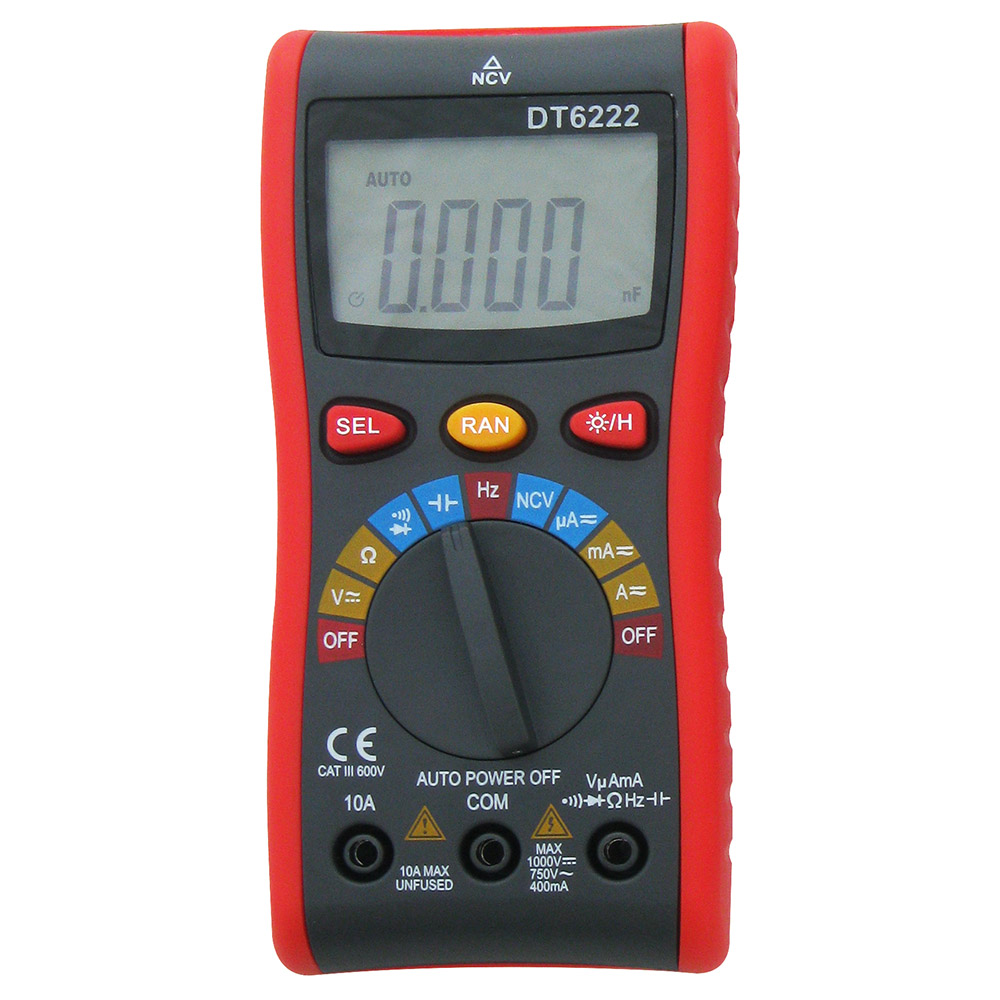
An ammeter reading comes from whichever jack the red lead is sitting in, because each jack is wired to a different shunt inside the meter. Put the red lead in the 10 A jack and you are reading across a heavy, low-resistance shunt; put it in the mA jack and you are reading across a lighter, higher-resistance one. The dial position sets the range and the decimal point, but the jack decides which of the two circuits you are actually connected to, and getting that wrong is the most common way a current measurement comes out silently wrong instead of obviously broken. The DT6222 puts microamps and milliamps on their own fused jack, while the XT802 routes every current range through a single 10 A jack with a 20 milliamp floor.
Every figure below is printed on the panel or listed on the production specification sheet of the meter named. Wenzhou Zhengyuan Electronic Co., Ltd. builds these instruments in its Wenzhou factory.
Which Jack to Use for Which Current
Read the jack column first and the range column second, because the jack is the decision you can get wrong and the range is only a choice of resolution.
| Jack | Range it covers | Use it when |
|---|---|---|
| 10 A | 20 mA to 10 A on the XT802, limited to 10 seconds per reading; 10 A unfused on the DT6222 | Motor, lamp and heater current, inrush checks, anything above a few hundred milliamps. On the XT802 it is the only current jack there is. |
| mA | 400 microamps, 4000 microamps, 40 mA and 200 mA on the DT6222, the input fused at 400 mA | Standby and quiescent current, sensor loops, four-to-twenty milliamp signals — anything you would describe in milliamps rather than amps. |
| Microamp ranges on the mA jack | 400 and 4000 microamps at plus or minus 1.4 percent | Parasitic draw work and low-power sleep current, where a 40 mA range would only resolve the first significant figure. |
| COM | Common return for every function | Always. The black lead does not move once it is in. |
| None of them | Above the meter’s top current range | Use a clamp meter around the conductor instead of breaking the circuit. Opening a 100 A circuit to insert a meter is a hazard, not a measurement. |
The XT802 has one current jack and the DT6222 has two because the two instruments are built for different work, not because one of them is better. What follows is the practical difference between them.
The Meter With One Current Jack
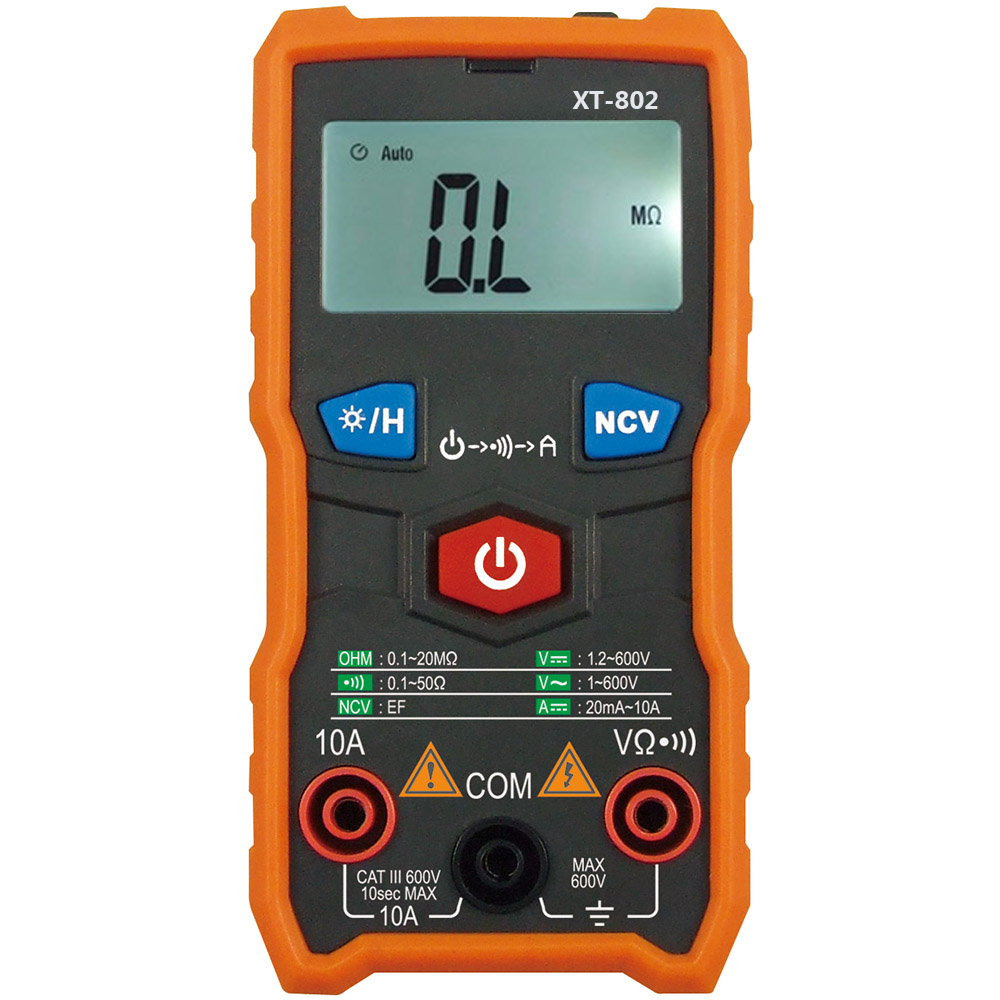
On the XT802 the panel marks the current range as 20 milliamps to 10 amps, and the 10 A jack carries a 10 second maximum. That is a wide single band, and it is honest about what it is: the lower bound comes from the resolution of the display, so below 20 milliamps the reading stops being meaningful. A standby current of 35 milliamps is measurable here. A standby current of 4 milliamps is not, because the last digit is all you would see.
The Meter That Separates Microamps and Milliamps
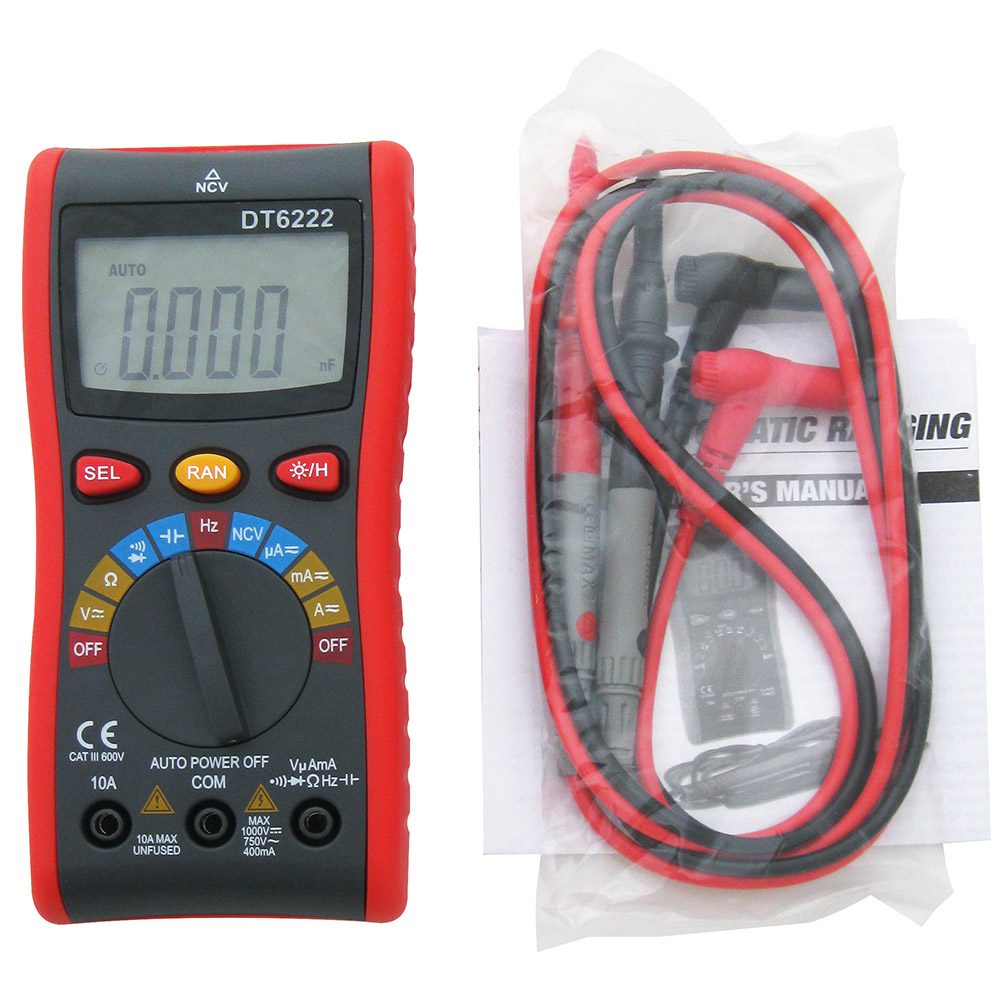
The DT6222 routes current through a different jack. Its combined voltage, microamp and milliamp input is fused at 400 milliamps and carries four DC current ranges — 400 microamps, 4000 microamps, 40 milliamps and 200 milliamps — all specified at plus or minus 1.4 percent on a 4000-count display. On the 40 milliamp range the last digit is 10 microamps, and that resolution is what makes a sleep-current measurement worth taking.
Why the 10 A Jack Has a Duty Limit
A 10 amp range works by passing the measured current through a shunt of very low resistance. Ten amps through that shunt produces heat, and the heat has nowhere to go inside a hand-held case, so the jack is rated for 10 seconds and then needs to cool. This is a real constraint rather than a formality: a meter left connected on a 10 amp load will drift as the shunt warms, and the reading will walk away from the truth before anything visible happens to the instrument.
The practical rule is that a 10 A jack is for taking a reading, not for monitoring a load. If the measurement needs to run for minutes, the right instrument is a clamp meter, which never breaks the circuit and never passes the current through the meter at all. The clamp meter procedure covers the setup, and that is the correct tool for anything continuous.
The Mistakes That Produce a Silently Wrong Reading
The first is leaving the red lead in the mA jack and then measuring a load that draws more than the input fuse rating. The fuse does its job, and the meter reads OL or zero, which is a clear failure rather than a misleading one. The second mistake is worse: leaving the lead in the 10 A jack and measuring four milliamps, which produces a number on the display that looks entirely plausible and is dominated by the resolution floor of the range.
A third mistake is not a jack error at all: connecting the meter in parallel with the load instead of in series with it, which shorts the supply through the meter’s internal shunt and blows the fuse immediately. A current measurement is always made by breaking the circuit and putting the meter into the gap. Every other measurement you make with the same instrument, including the ones the basic multimeter procedure describes, is made in parallel, which is exactly why the habit carries across by accident.
Choosing Between the Two Layouts
If the work is mains loads, motor circuits and appliance current, one wide 10 A band is enough and the XT802 is the simpler instrument. If the work includes automotive standby current, battery-powered equipment or anything that runs in the low milliamps, the separate fused microamp and milliamp jack on the DT6222 is the specification that matters, because a 40 milliamp range is the difference between reading the number and guessing at it.
Where the same meter has to cover both, the deciding question is how often the low-current case comes up. A distributor stocking for automotive workshops and equipment repair shops will find that low-current work is the majority of the job, and the automotive multimeter guide sets out the measurement set that work runs on. The XT802 stays the faster instrument for panel and appliance work, where currents are large and the question is simply whether the load is drawing what its rating plate says.
Send Us the Currents You Need to Measure
If you are choosing between these two layouts for a workshop, a distributor’s range or an OEM order, order a sample of each and measure the same load on both, then tell us which one your technicians reached for. Send us the smallest and the largest current you actually need to read, and the quantity you are planning. Our Wenzhou engineers reply within 24 hours, confirm which model fits the line you are building, and quote per-unit pricing once we have your numbers.